
- Home >
- Social Responsibility >
- Our Role as an Institutional Investor >
- Sustainable Investment
Sustainable Investment
Sustainable investment method
Components of the Company's sustainable investment method are defined as follows.
| Sustainable Investment Method | Definitions | |
|---|---|---|
| Integration | Systematically incorporate environmental, social, and governance factors into the process of investment decisions with the aim of reducing portfolio risk and enhancing returns | |
| Positive screening | Build a portfolio of companies with high ESG ratings | |
| Negative screening | Exclude certain industries, companies, etc. from the portfolio | |
| Sustainability thematic investment | Investments to assets with themes that lead to solutions to social issues, based on the premise of profitability (Environment & climate solution investment : of which investment that contribute to solving environmental and climate change issue) |
|
| SDGs bond | Investment to international organizations that promote projects that contribute to the achievement of the SDGs (Green Bonds, Social Bonds, Sustainability Bonds, etc.) | |
| SDGs project | Funding for projects that contribute to the achievement of the SDGs (social infrastructure development, environmental conservation, etc.) | |
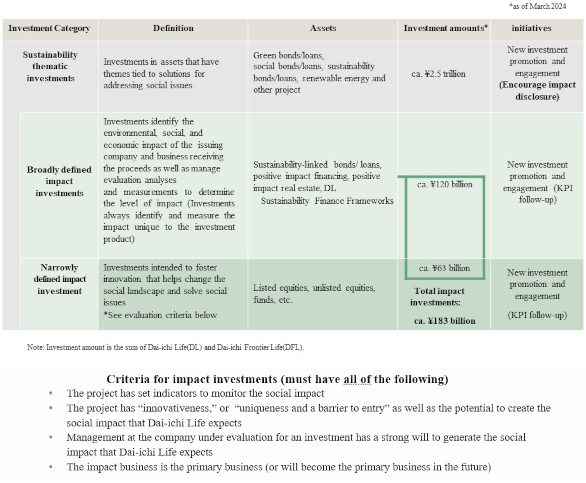
| Impact Investment | Investment that aims to both generate investment income and social impact | |
< Investments to Create a Positive Impact on Society (the Definition of Impact Investment) >
We began impact investments centered upon unlisted equities in FY2017 (listed equities added from FY2020). We select these according to the vision of solutions and innovations to overcome social issues and regularly monitor the social impact after investing.
In an effort to further expand the positive impact of the investment portfolio, from FY2022, investments that require the identification and measurement of impact due to the characteristics of the investment product will also be included in "impact investments" and impacts will be monitored.
We also will measure the social impact of sustainability thematic investments and encourage investees to disclose their impact through engagement with investee organizations.
Initiatives for Sustainability thematic investment
Achievements and Targets of Investments Addressing Social Issues
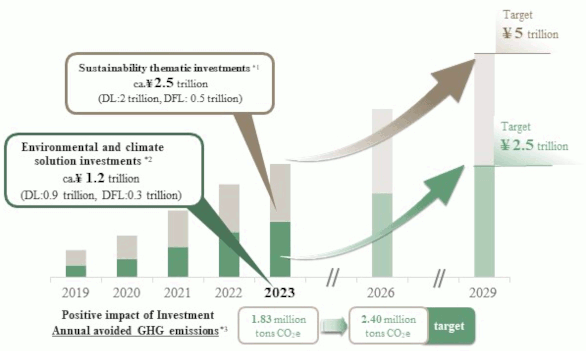
In order to contribute to the realization of a sustainable society, Daiichi Life and Daiichi Frontier Life aim to accumulate 5 trillion JPY for sustainability thematic investments by the end of March 2030 (DL and DFL combined), including 2.5 trillion JPY for investments that contribute to the solution of environmental and climate change issues. As of the end of FY2024, DL and DFL showed steady progress with 3.1 trillion JPY for sustainability thematic overall / 1.5 trillion JPY to the solution of thematic investments. We have set these targets based on the global funding gap for the realization of a sustainable society by 2030 and the AUM of DL and DFL.
To expand positive impacts, we have set their GHG reduction contribution target to 2.4 million tons of CO2e / year by 2026; however, the target (3 million tons of CO2e / year) has already been achieved in FY 2024. Therefore, we set a new target to achieve 4.5 million tons of CO2e / year by FY2029 to further expand positive impacts.
- *1 Include renewable energy power generation projects for which estimates can be made based on the amount of electricity generated (measured in accordance with PCAF standards), and green bonds that disclose their impact (including the data provided by ICE Date Services)
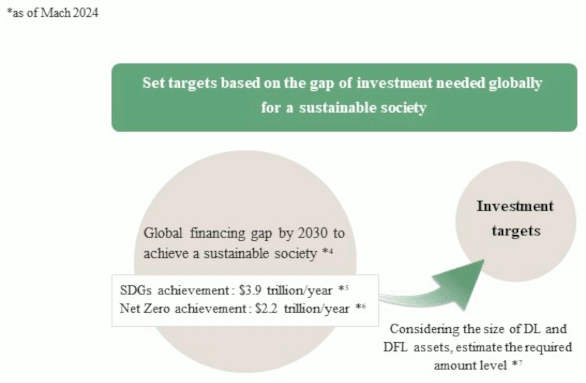
- *2 Consider the funding gap towards achieving the SDGs for sustainability thematic investments, and funding gap towards net zero by 2050 for environmental & climate solution investments
- *3 OECD (2022), Global Outlook on Financing for Sustainable Development 2023
- *4 NZAOA (2023), Unlocking Investment in Net Zero
- *5 (Expected funding by private financial institutions by 2030) × (AUM of DL and DFL) ÷ (total AUM of PRI - signatory financial institutions)
Promotion of Investments to Solve Environmental and Social Issues
With a view to realizing a sustainable society, Daiichi Life promotes sustainability thematic investments, that contribute to addressing environmental and social issues, and strives to create positive impacts.
Considering the connection with its Core Materiality, the company categorized major positive impacts created through investments into environmental impacts (climate change, natural capital) and social impacts (health & healthcare, financial inclusion, and diversity).
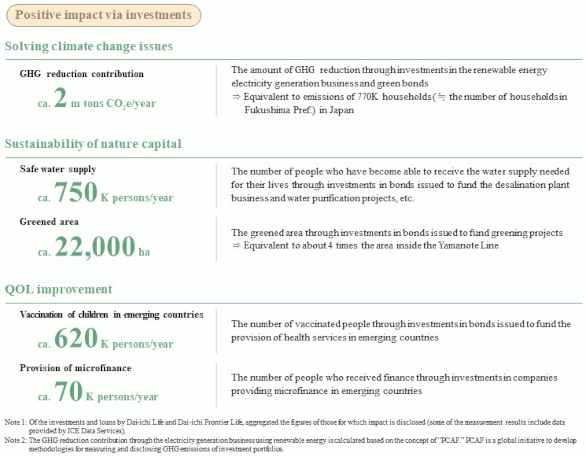
- Note 1: For investments by Daiichi Life and Daiichi Frontier Life that disclose impact, measurements are conducted taking into account the company's shareholding (with some of the measurement results including data provided by ICE Data Services).
- Note 2: The avoided GHG emission through the electricity generation business using renewable energy is calculated based on the concept provided by "PCAF."
PCAF is a global initiative to develop methodologies for measuring and disclosing GHG emissions of investment portfolios. - Note 3: Impact of safe water supply, malnutrition treatment for children in emerging countries, financial inclusion, and diversity promotion may include the impact before the investment by DL and DFL because cumulative values are partially included.
Examples of Main thematic investments
 |
|
 |
| In May 2020, Daiichi Life provided ¥2 billion to a microfinance loan scheme for developing countries in which Crédit Agricole Tokyo Branch acts as the borrower. The funds obtained through the loan scheme are provided to the Grameen Crédit Agricole Foundation so that they are lent to local microfinance institutions that aims to support the promotion of women's empowerment and economic development. | ||
 |
|
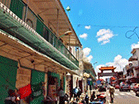 |
| In March 2022, Daiichi Life invested ¥3 billion into repackaged products backed by financing for the African Export-Import Bank (Afreximbank). The funds the Company has invested in will be directed to medical and pharmaceutical projects in African countries, including much-needed support to procure and supply COVID-19 vaccines. Through this investment, the Company will provide financial support for Afreximbank's efforts to help African countries affected by the COVID-19 pandemic. |
||
 |
|
 Source: ADB |
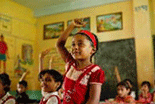
| Daiichi Life invested approximately ¥6 billion in Education Bonds issued by the Asian Development Bank "ADB". The bond will strengthen its support for increasing opportunities for high-quality education following COVID-19 through efforts such as greater use of distance and online learning and use of digital technologies for scaling equitable learning, training and teaching with partnerships for expanding access to affordable and reliable internet connectivity. |
||
 |
|
 Source: ADB |
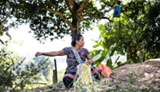
| In November 2017, Daiichi Life invested approx. ¥10 billion in the Gender Bond issued by the Asian Development Bank (ADB) .The proceeds raised through the Gender Bond will be used for projects to promote gender equality and women's empowerment in the Asia-Pacific region. | ||
 |
|
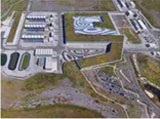 |
| In December 2017, Daiichi Life invested approx. ¥4.4 billion in one of the world's largest desalination projects being undertaken in Australia to cope with water shortages associated with large-scale drought and future population growth. | ||
 |
|
 Source: Sharing Energy |
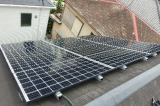
| In October 2024, Daiichi Life invested ¥1.3 billion in the project for roof-mounted low-voltage distributed solar power generation systems for over 2,000 individual residences distributed throughout Japan. | ||
 |
|
 Photo credit: MPower Partners GP, Limited |
| In May 2021, Daiichi Life invested in global venture capital fund "MPower Partners Fund L.P.". With the goal of empowering entrepreneurs providing tech-enabled solutions to societal challenges, the Fund has established healthcare / wellness, financial technology, next-generation work / education, next-generation consumer, and environment / sustainability as its key fields of investment, and invests in Japanese and overseas startups in these areas. | ||
 |
|
 Source: Japan Entertainment |
| in 2025 Daiichi life invested in a new theme park based on the natural environment of Yanbaru, which is scheduled to open in the northern part of Okinawa Prefecture (Nakijin Village and Nago City). | ||
 |
|
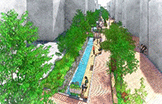 |
| In October 2021, Daiichi Life invested in a social impact bond for a community development project in Maebashi, Gunma Prefecture. The project aims to increase pedestrian traffic on Babakawa Street and revitalize the surrounding area. | ||
 |
|
 Source: Aichi Prefecture |
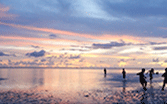
| In February 2025, Daiichi Life fully purchased bonds issued by Aichi Prefecture with proceeds exclusively allocated to flood control (green bond) and earthquake countermeasures, totaling JPY 5.0 billion. The funds raised are allocated to river and coastal improvement projects as part of adaptation measures to rapidly progressing climate change. |
||
 |
|
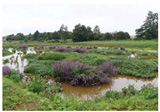 Photo credit: Anglian Water Services Financing PLC |
| In September 2021, Daiichi Life invested approx ¥3.9 billion in a green bond issued by Anglian Water Services Financing PLC ("Anglian Water"). The proceeds raised from this bond will be used toward natural water treatment facility maintenance projects which utilize wetlands, projects which promote the inhabitation of indigenous species by conducting maintenance on the flow of rivers and waterfronts to restore the characteristics of natural rivers, and the like. | ||
Impact Investment
Daiichi Life engages in impact investment, an investing method intended to both gain investment returns and create positive social impacts. We conduct ongoing monitoring of companies that have received impact investments with regard to the progress of their initiatives and social impacts. Some of our leading examples are as follows.
Investee Company *Please click logo to see related news release |
Investment amount (at the time of release) |
Company overview | Social impact | ||
|---|---|---|---|---|---|
 |
¥1.2 billion | Micro-finance business in developing countries | 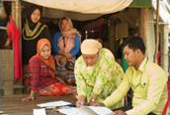 |
Improve access to finance in developing countries | |
 |
¥1.0 billion | Development of next-generation biomaterials to replace materials derived from fossil fuels | 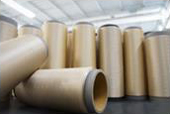 |
Reduce environmental impact (reduction of greenhouse gas emissions, etc.) | |
 |
¥1.1 billion | Research into treatment applications for conditions such as nicotine dependency |  |
Dramatically increase treatment results, extend healthy lifespans, and reduce medical costs | |
 |
¥100 million | Use of AI in development of pharmaceuticals Platform development | 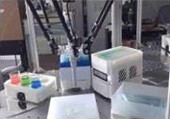 |
Shorten pharmaceutical development lead times and reduce medical costs | |
 |
¥200 million | Development of wind power generator capable of generating electricity even in a typhoon | 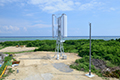 |
Reduce CO2 emissions through alternatives to diesel power generation, etc. | |
 |
¥2.5 billion | Venture fund focused on environment and energy sectors | Reduce GHG emissions by promoting renewable energy and energy conservation |  |
|
 |
¥200 million | Development of diagnostic systems for early detection of breast cancer |  |
Reduce death rates through early breast cancer detection | |
 |
¥800 million | Development of solutions utilizing IoT and AI to create smart nursery care facilities |  |
Resolve the lengthy nursery care waiting list problem | |
 |
¥200 million | Development and provision of IT and programming educational services for junior and senior high school students |  |
Resolve the IT personnel shortage | |
 |
¥12 million | World's first anti-smoking social impact bond aimed at an anti-smoking project in Toyonaka being run by CureApp | Extend healthy life expectancy | |
|
 |
¥200 million | New drug development using advanced computational science and technology |  |
Achieve universal access to health care | |
 |
¥100 million | Japanese venture company providing the Share Denki service for use of third-party residential solar power generation systems | 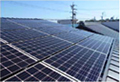 |
Reduces CO2 emissions by popularizing renewable energy, etc. | |
 |
¥700 million | Venture company researching, developing, and manufacturing space robotics |  |
Encourage space development to foster economic growth by dramatically reducing labor costs in space | |
 |
¥500 million | Venture startup of Tokyo Institute of Technology developing pneumatically driven surgical robots capitalizing on proprietary pneumatic control technologies |  |
Better quality of life for patients by expanding medical care using surgical robots | |
| WASSHA | ¥300 million | A Japanese venture company that provides solar power generation services to people living in un-electrified areas in Africa. |  |
Contribution to the improvement of living standards and economic independence in un-electrified areas of Africa. |  |
| READYFOR | - | A Japanese venture company that provides a new means of fundraising through crowdfunding for projects with a high social contribution potential in medicine, research, NPOs, regional revitalization, culture, etc. |  |
Building a network of support for a sustainable society. |  |
| CLEAN ENERGY CONNECT | ¥300 million | A Japanese venture company offering low pressure and distributed off-site corporate PPA to corporate clients. | 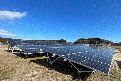 |
Early transition to a decarbonized society. | |
| JEPLAN | ¥500 million | A Japanese venture company working to promote and expand resource recycling using its proprietary "BRING Technology™" chemical recycling technology for horizontal recycling of PET bottles. | 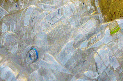 |
Realization of a sustainable society. | |
 |
¥500 million | Japanese start-up company that develops and provides medical-related services such as "Musubi", a cloud-based electronic drug history and medication administration guidance system for dispensing pharmacies. | Development and provision of healthcare-related services, including systems for pharmacies, to improve patient quality of life and build a sustainable healthcare system for the future. |  |
|
 |
¥100 million | A start-up company that plans, establishes, and operates plant factories with artificial light that can cultivate resource- saving and high-quality plants regardless of locations. | 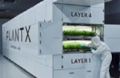 |
Environmental conservation through sustainable cultivation of plants in the closed cultivation machines. |  |
 |
ca. ¥750 million | A U.S. bio-venture company that develops and sells drugs and medical devices used for the Alluminox treatment (photoimmunotherapy) based on its proprietary technological platform called Alluminox™ platform. |  |
Expand treatment options for cancer patients by supporting the development of advanced cancer treatments. | |
 |
¥100 million | A venture company that specializes in the production and distribution of 3D-printed prosthetic limbs tailored for low- and medium-income demographics in the Philippines and India. | 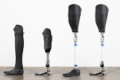 |
Providing high-quality and affordable 3D-printed prosthetic limbs for the improvement of the people's Quality of Life in developing countries. |  |
 |
¥100 million | A domestic venture company that operates a proprietary online platform which connects coffee producers in developing countries and roasters in developed countries, and enables them to directly trade coffee beans. | 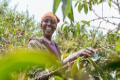 |
Help solve poverty issues in developing countries through direct trading of coffee beans. | |
 |
¥150 million | A venture company developing a "support business for medical institutions" specializing in infertility treatment. |  |
Contributing to the Improvement of Quality of Life by Supporting Fertility Treatment and Career Development Contribute to further development of reproductive medicine. | 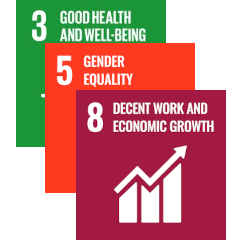 |
 |
¥100 million | A Japanese start-up company that provides the tool that enables construction subcontractors across the country to centrally manage administrative tasks such as attendance tracking, worker dispatching, and business operations via smartphones. |  |
Contributing to productivity improvement through operational efficiency in the construction industry. | |
Integration Initiatives
Integration into Research
Daiichi Life integrates environmental, social, and governance factors into each asset according to asset characteristics to continually push forward action that increases the sophistication of integration.
Enhancing Sophistication of Integration
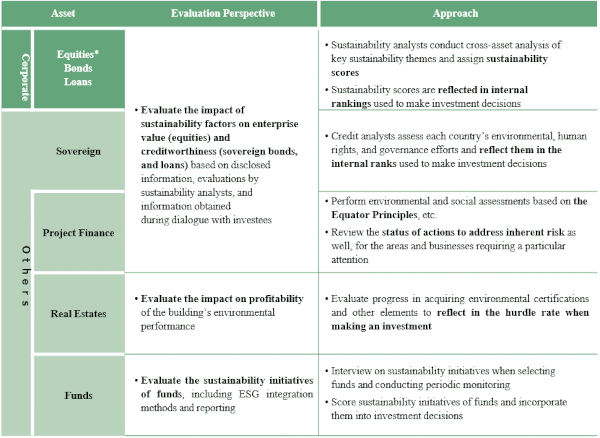
- *Includes listed equities, emerging markets listed equities, and private equities
Integration Methodology (Equities, Corporate Bonds, Loans)
Daiichi Life optimally integrates environmental, social, and governance factors into each asset according to liquidity and characteristics, and then appropriately reflects these in investment decisions.
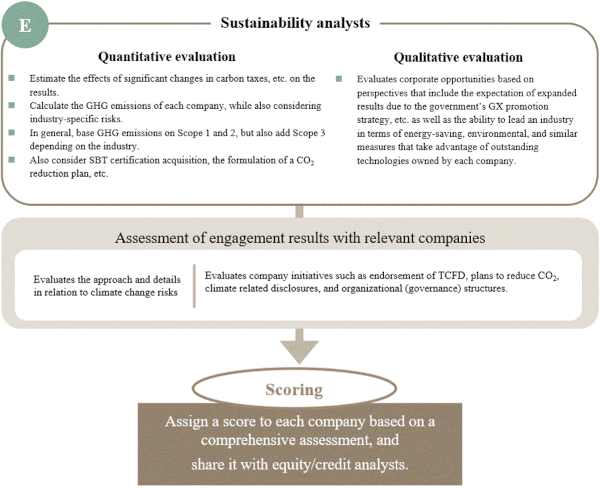
Sustainability analysts select priority themes from various sustainability issues, and then conduct cross-sector research and analysis. A sustainability assessment is performed on a theme basis, and the results of the assessments are shared with equity / credit analysts. Each asset analyst references such results when considering the internal rank of each company.
Positive Screening (Foreign Equities)
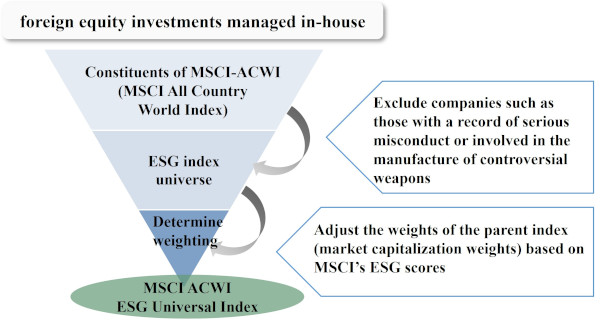
From September 2020, ESG index is adopted as investment targets (benchmarks) for foreign equity taking environmental, social and governance factors into account in overall foreign equity managed inhouse.
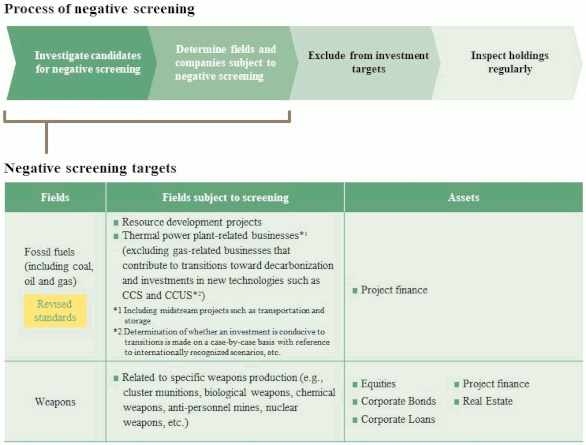
Negative Screening
Daiichi Life determines the scope of negative screening in consideration of the characteristics of the life insurance business and the sustainability of society.
Fossil fuel resource development projects, transportation and storage projects, and thermal power plant-related projects are the subject to the negative screening policy. As a responsible investor, it is important to support the transition of existing fossil fuel businesses. Therefore, we will make individual investment decisions on projects that contribute to transitions, based on internationally recognized Net Zero scenarios and the status of technological innovation.